
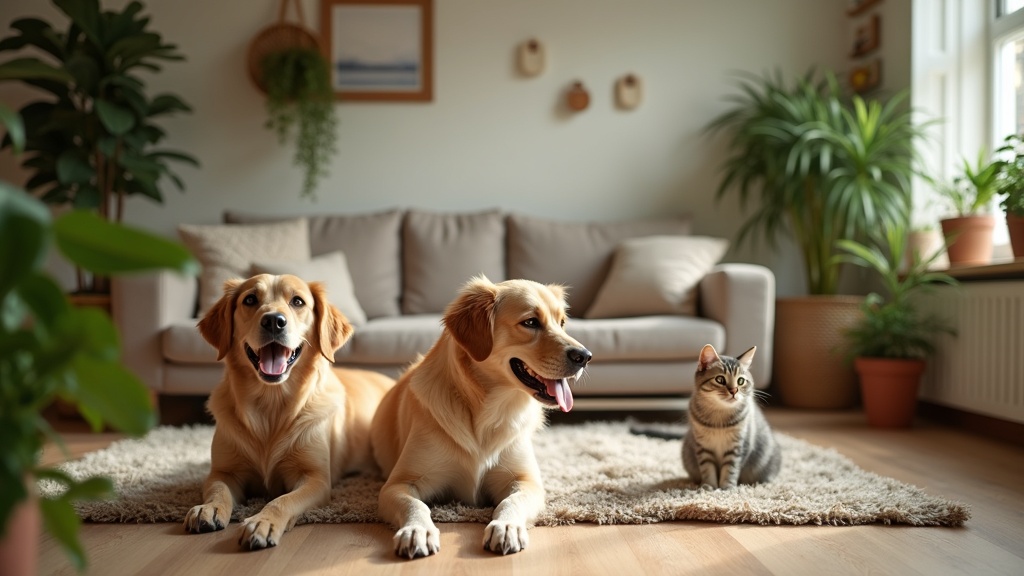
Transforming our homes into spaces that foster the well-being of our pets is an investment in their happiness, and by extension, ours. As we strive to create harmonious living environments, the choices we make inside our homes can significantly impact our pets' physical health, mental stimulation, and emotional balance. Let's explore the vital elements that contribute to flourishing pets by designing home environments tailored for them.
Understanding Your Pet's Unique Needs
Every pet has unique characteristics and requirements shaped by their breed, age, and personality. Emily, a professional pet behaviorist, emphasizes the importance of understanding the specific needs of your pets. ‘Recognizing these needs can help you create an environment that supports both their physical health and emotional well-being,’ she notes. This understanding acts as the foundation from which all other environmental choices should be made.
Crafting Comfortable Spaces
Comfort is paramount in any pet-friendly home. Sarah Johnson, an interior designer specializing in pet-appropriate decor, advises integrating spaces within your home where pets can rest and relax. 'Consider soft and durable materials that are easy to clean, while also providing warmth and support to our furry companions,' she says. Not only does this enhance the pet's sense of security, but it also aligns with a household design that reflects comfort and hospitality to all inhabitants.
Incorporating Playzones for Mental Stimulation
Pets thrive on engagement and mental challenges. Creating designated areas for play provides essential outlets for their energy and curiosity. Max Rigby, a vet tech with a knack for pet enrichment, stresses the significance of these play zones. 'Incorporate interactive toys and climbing setups for cats, or puzzle feeders for dogs to ensure they have regular mental stimulation,' Max suggests. These spaces act as arenas where pets can unleash their instinctual behaviors safely.
Ensuring Safety At Every Turn
A pet’s safety is of utmost importance, and our homes hold many potential hazards. Lisa Anne, a pet safety consultant, advises pet owners to take precautionary measures such as securing loose wires, using pet-friendly plants, and ensuring toxic substances are out of reach. 'A vigilant approach in assessing hazards can prevent a multitude of accidents,' she cautions. This readiness to safeguard their environment contributes to a peaceful home for both pets and humans.
Lighting and Accessibility Considerations
The way light interacts with the surroundings in which pets live can influence their mood and behavior. Trevor Hughes, an expert in spatial design, notes how natural light positively impacts pets. 'Make windows accessible for sunbathing, or provide safe access to outdoors so pets can enjoy natural light,' Trevor recommends. Easy access to these areas enhances an environment conducive to well-being, ensuring your home always feels welcoming.
Routines and Household Habits
Establishing structured daily routines gives pets a sense of security and reduces anxiety. Rebecca Tooley, a long-time pet owner and blogger, shares how incorporating regular feeding, playtime, and grooming schedules helps maintain behavior balance. 'Consistency in household habits encourages stability and helps pets better adapt to living environments,' she states. These habits allow for a harmonious coexistence between pets and their human families.
Balancing Social Interaction and Solitude
Pets, much like people, require a balance between social interaction and moments of solitude. Jake Moreno, a pet socialization coach, highlights the need for pets to have private retreats. 'Sometimes pets need their own space just to wind down from social activities,' Jake explains. Providing quiet retreats alongside social areas helps manage their stress and contributes to overall behavior management.
Fostering a Pet-friendly Community Connection
Connecting with a community of pet lovers can extend your understanding and improve your pet-friendly strategies. Laura Kinsey, an organizer of local pet enthusiast meet-ups, points out the benefits of sharing experiences and advice with other pet owners. 'It builds a support network that enhances your ability to meet your pet's needs efficiently,' she explains. Through continuous learning and exchange, owners find new ways to improve their pets' environments.
Adapting to Change with Sensitivity
Changes within a home environment can occasionally unsettle pets. Being sensitive to their responses and adapting subtle changes can prevent discomfort. Dr. Sam Lin, an animal psychologist, suggests gradual introductions to changes in the household. 'Whether it’s rearranging furniture or moving homes, gradual introductions pave the way for a smooth transition,' he assures. Staying attuned to pets' signals allows owners to adjust according to their comfort, maintaining a stable environment even amidst changes.